mortgages.co.nz & Tony Alexander Mortgage Advisers Survey – October 2022
First home buyers active
Each month we invite mortgage advisers around the country to give insights into developments in the residential real estate market from their unique perspective. Our latest survey, undertaken last week, attracted 56 responses.
The main themes to come through from the statistical and anecdotal responses include these.
First home buyers are confirmed as back in the market.
Investors however continue to hold back.
Worries about interest rates have encouraged a small shift back towards fixing for two years and away from fixing one year.
More or fewer first home buyers looking for mortgage advice
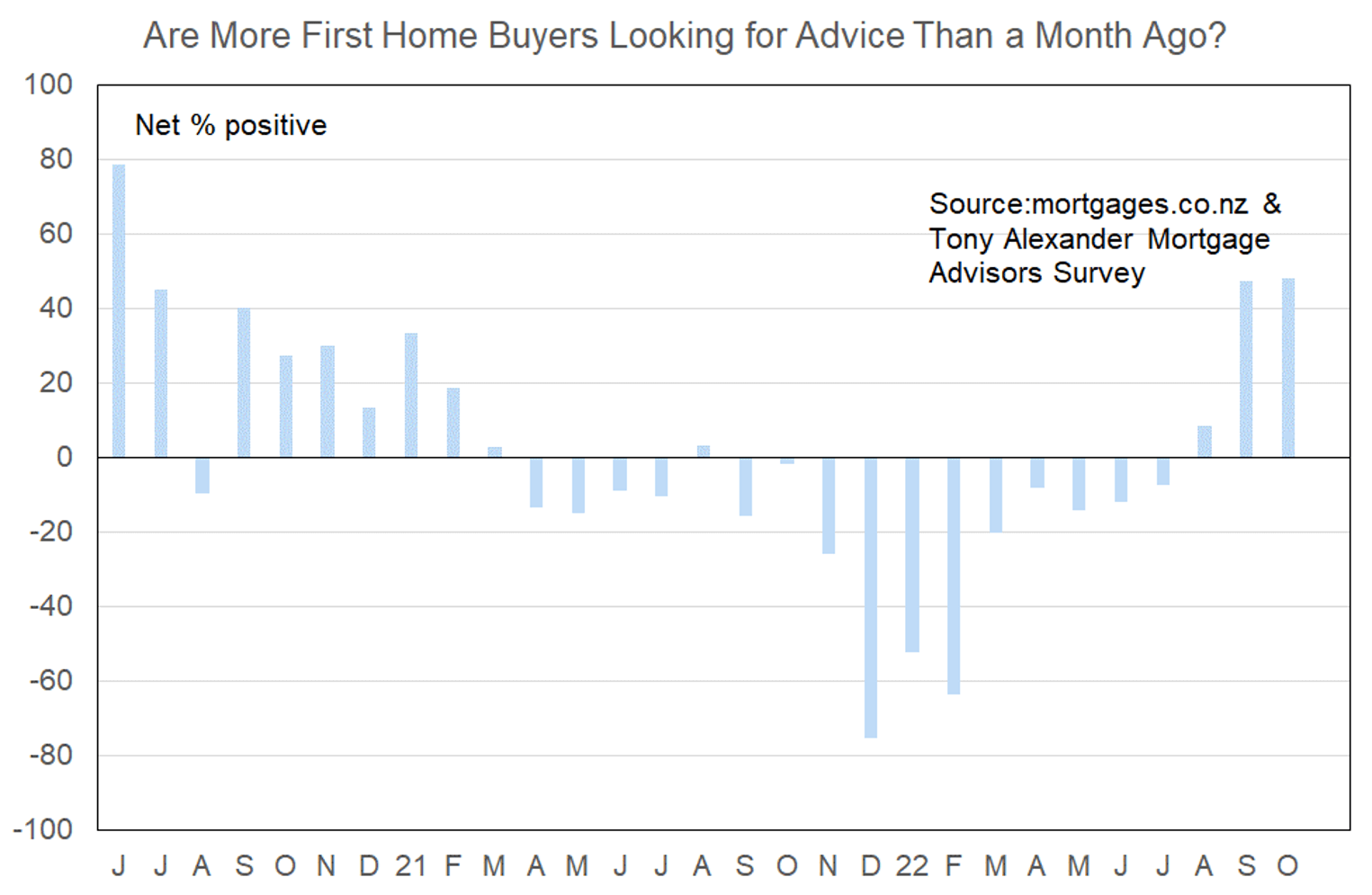
For the third month in a row more advisers have reported seeing more first home buyers seeking assistance with their financing than have reported that they are seeing fewer. This month’s net 48% positive result is the same as last month. This tells us that although there is an observable return of young buyers to the market their re-entry is not at this stage snowballing into a generalised movement by most first home buyers.
Comments on lending to first home buyers submitted by advisers include the following.
We are seeing banks saying they are willing to lend to first home buyers, but the actual criteria are so restrictive its near impossible.
A bit easier getting low deposit finance with Kainga Ora changes.
Still limited ability to lend to those with a deposit of less than 20%.
Barely any lending over 80% except First Home Loan and the queues are horrendous.
More or fewer investors looking for mortgage advice?
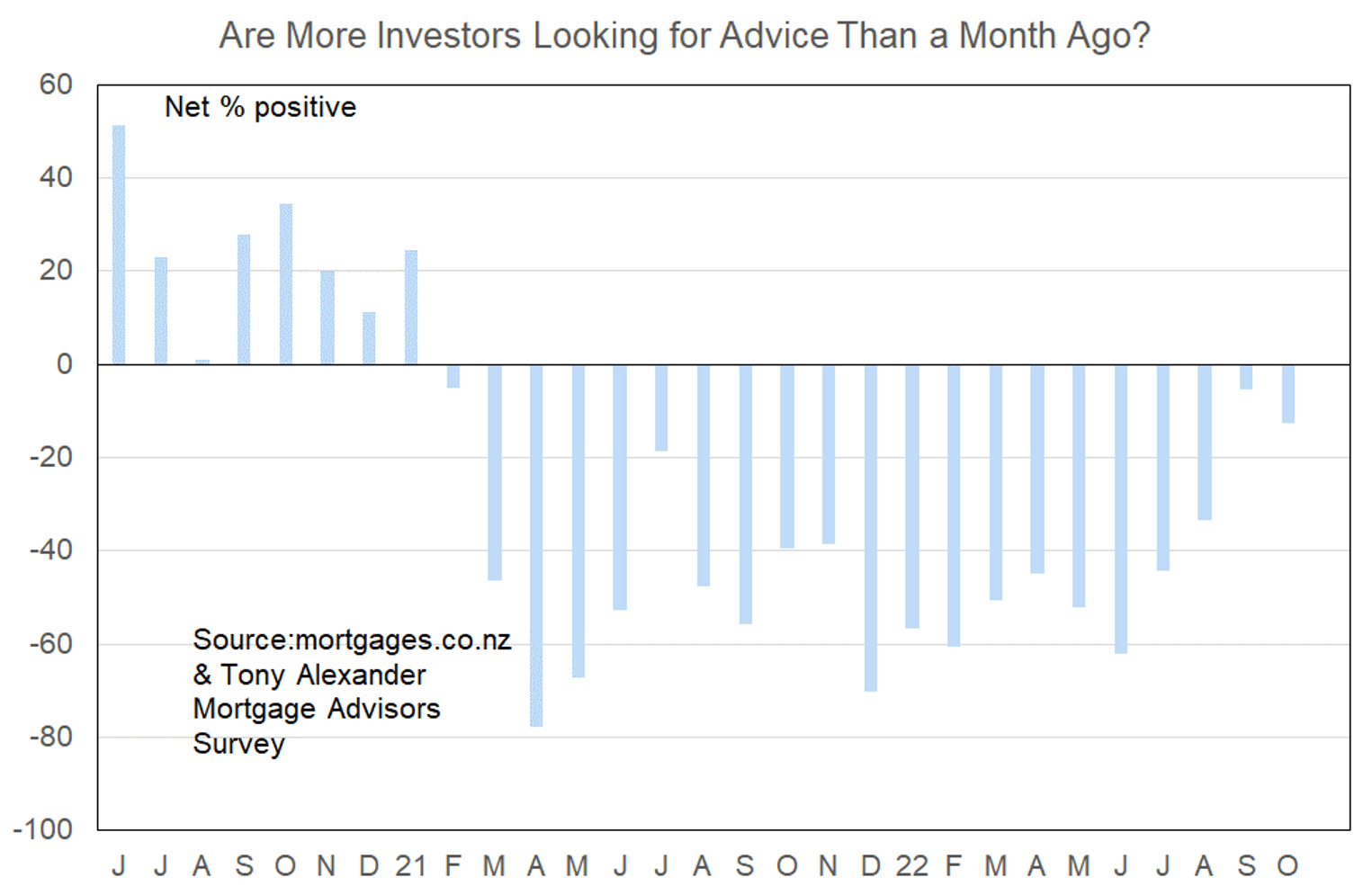
In contrast to the solid return of first home buyers to the market it remains the case that mortgage advisers continue to see investors backing away. All that can be said is that the extent to which investors are stepping back has eased over the past four months. But many factors are keeping their demand low including tax changes, rising interest rates, and slowing rents growth.
Comments made by advisers regarding bank lending to investors include the following.
Servicing is tight with increasing test rates, large scaling of rent and separating rates and insurance for each property.
One lender at a smaller NZ bank explicitly said they didn’t really have much appetite for investor lending at the moment and would prefer to grow their owner occupied book more instead.
Ok for new build, existing forget it.
Still 60% LVR for existing properties. Higher discount of rental income for existing property rental income compared to new build properties.
More or less lenders willing to advance funds?
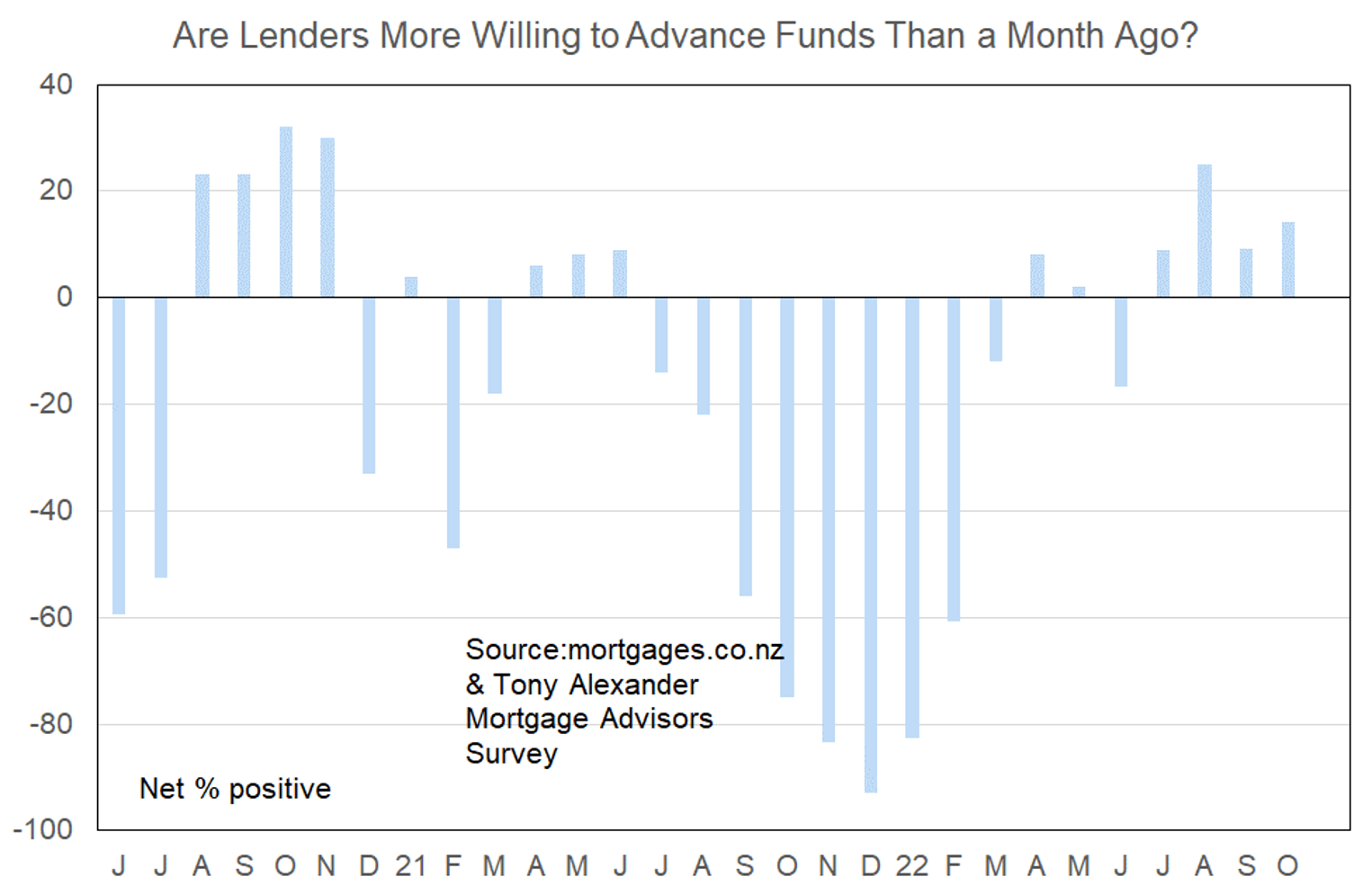
For four months in a row more mortgage advisers have reported improved willingness of banks to advance funds than reduced willingness. However, there is no improving trend underway in this measure and the comments made by advisers make it clear that banks are still applying very stringently the rules set by the Reserve Bank along with their own risk management requirements.
What time period are most people looking at fixing their interest rate?
Around the world concerns about rising interest rates have soared in the past month in response to a substantial easing of fiscal policy in the United Kingdom raising concerns about a debt blowout when the ratio of government debt to GDP is already 100%. In addition, inflation measures in the United States continue to print largely on the higher than expected side. Plus, there is some renewed upward pressure on oil prices and therefore inflation stemming from OPEC’s decision to cut oil output.
Hikes in wholesale borrowing costs facing banks have led to some fixed mortgage rates for shorter terms going up and unless things change very quickly in the wholesale markets further increases for all terms are likely as banks seek to rebuild currently very crunched margins.
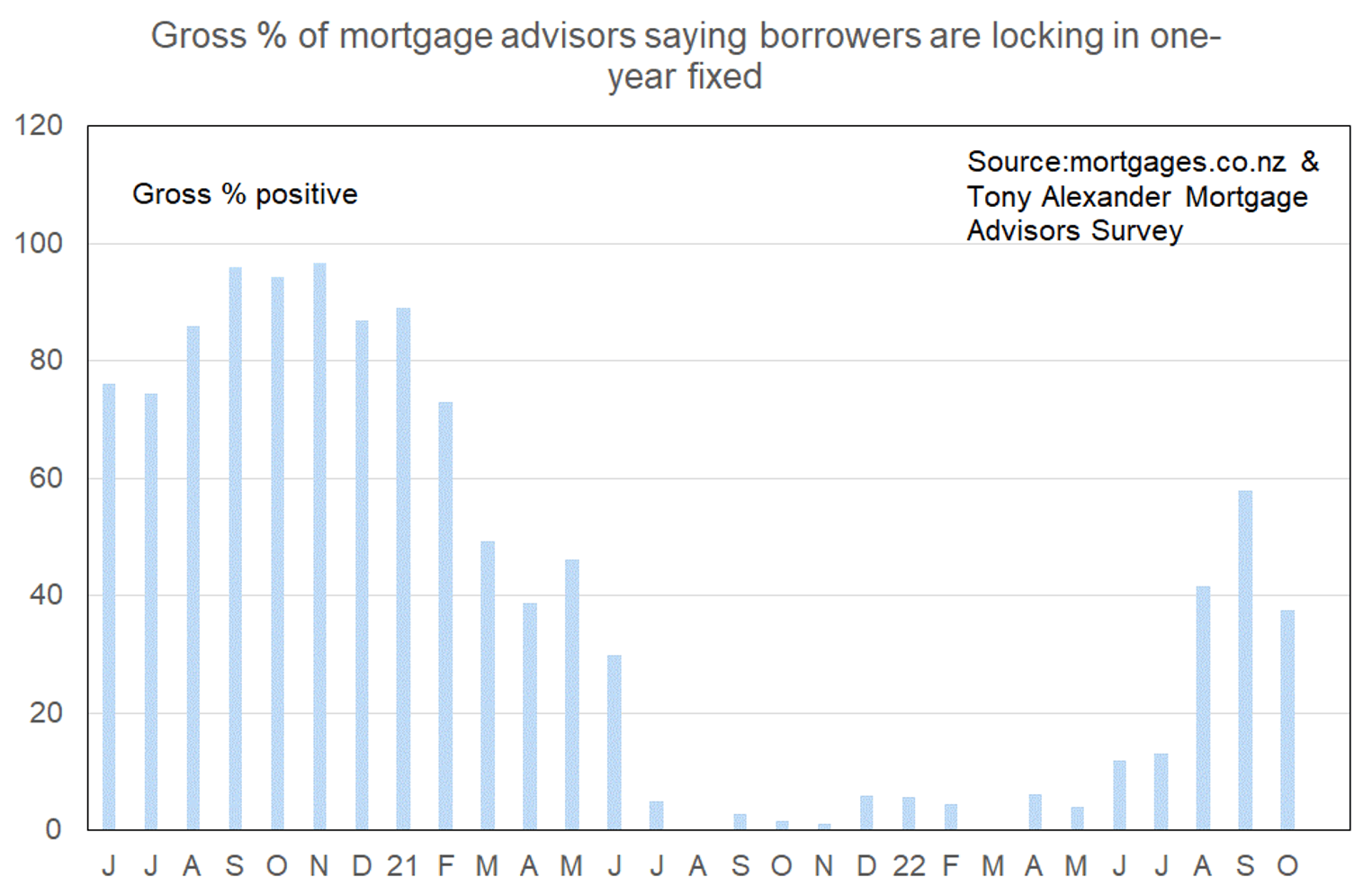
As a result of the reduced optimism about interest rates borrowers have pulled back on their enthusiasm for fixing just one year. Last month 58% of advisers said that borrowers preferred the one year term. This month 38% have said that.
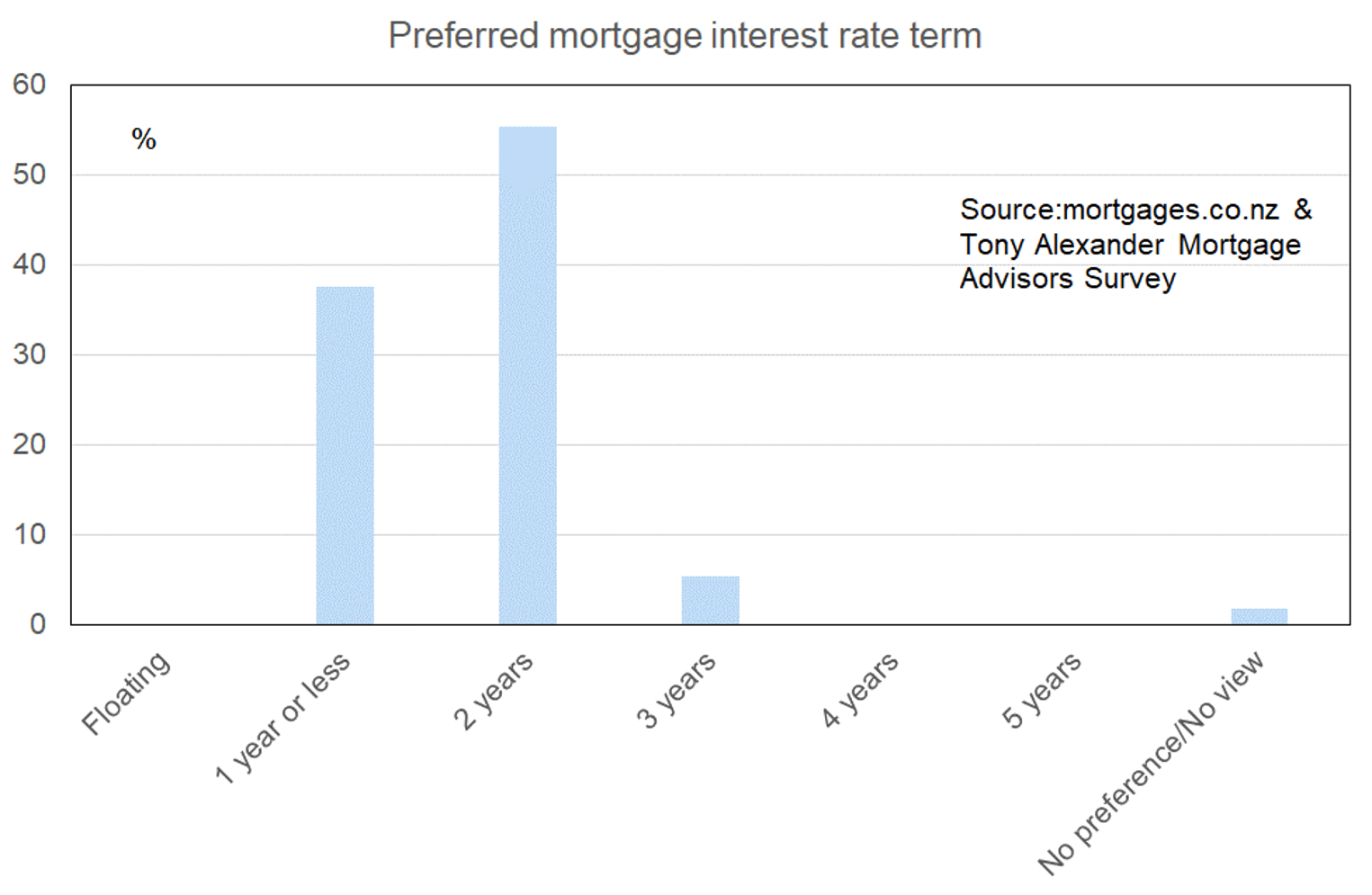
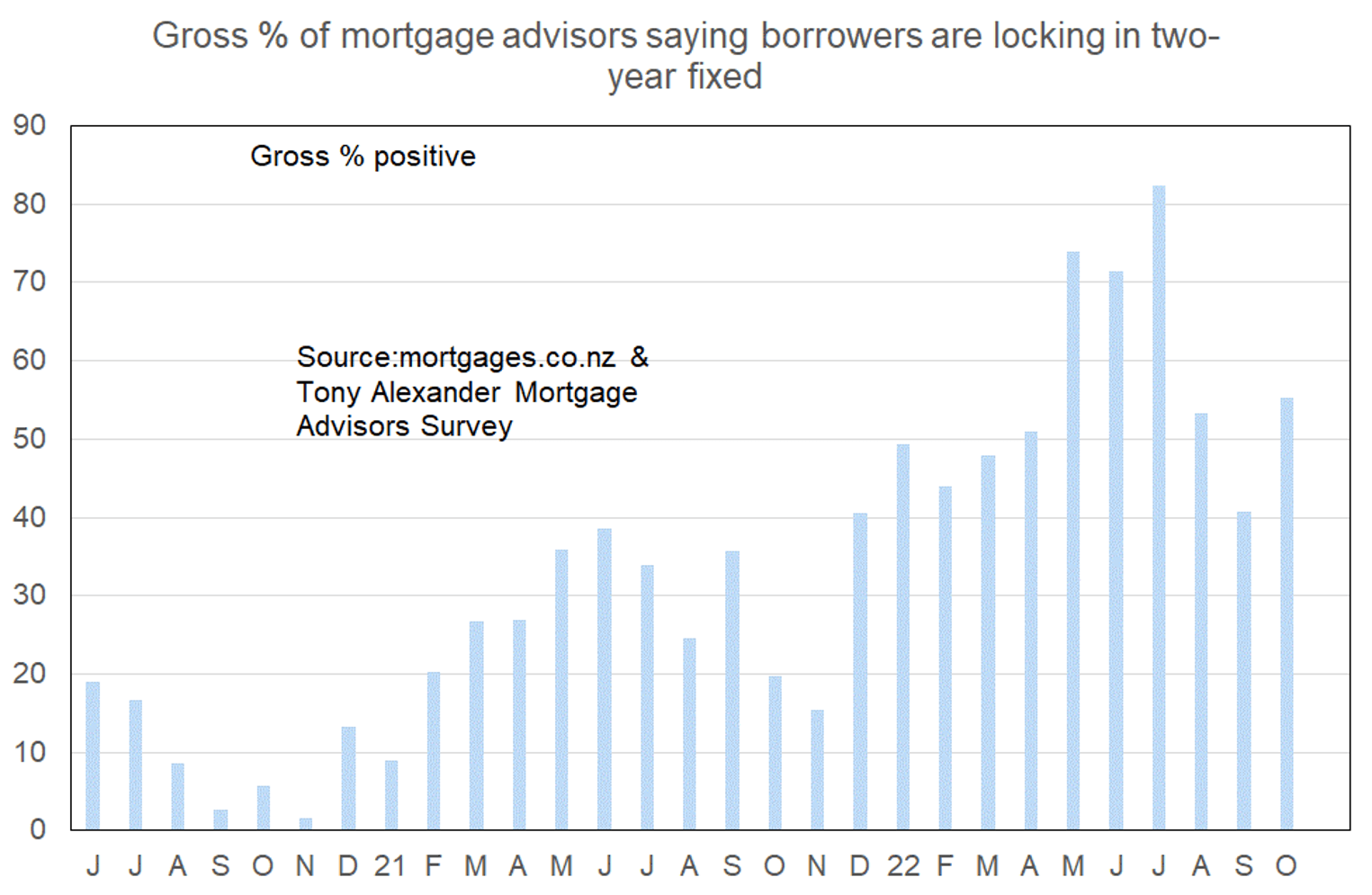
The preference for fixing two years has been cited this month by 55% of advisers, up from 41% last month.
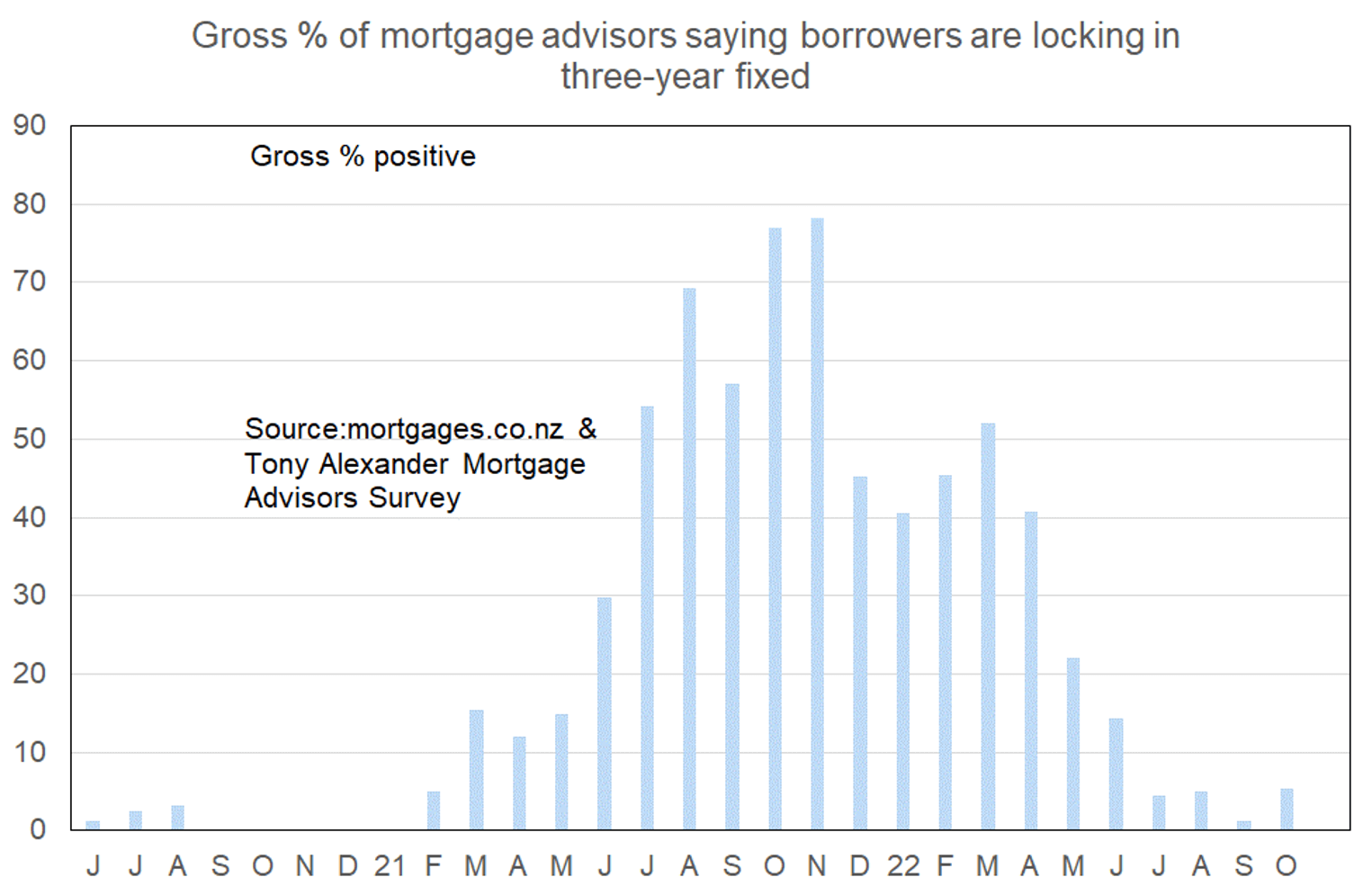
There has even been a rise in the proportion saying that borrowers prefer to fix their interest rate for three years – but only to 5% from 1%.
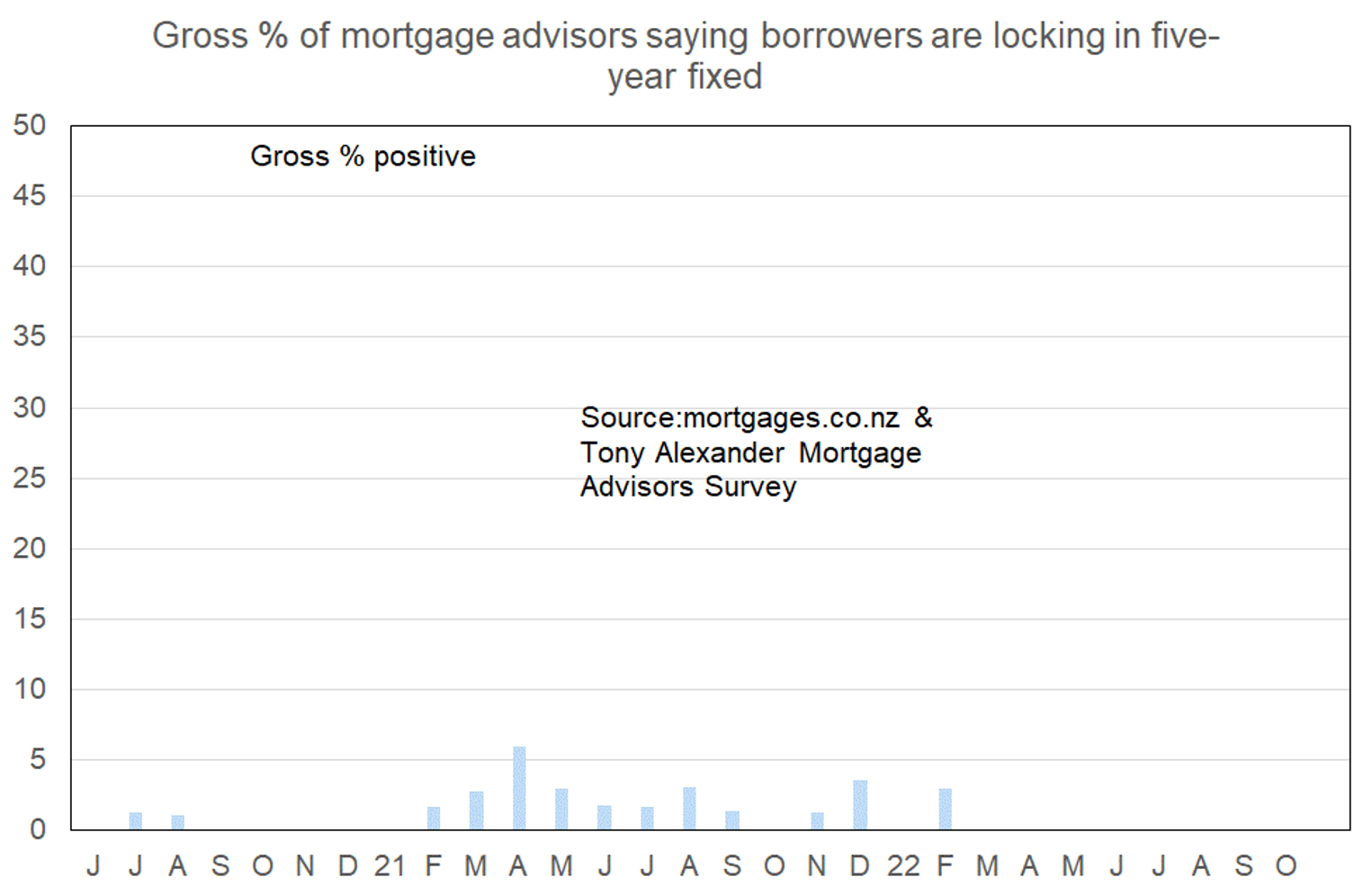
Demand for fixing five years remains at essentially zero.