Buying your next home


Moving onto the next chapter of your life.

A new goal

When it’s time to buy another home, careful preparation helps you to get what you want with minimal stress. Here’s a refresher course for nailing the next chapter of your property journey.

Choose a buying and selling strategy

Is it better to sell before you buy or vice versa? There are pros and cons associated with both strategies:

Selling before you buy

Selling your current home before you buy another gives you a clear picture of your financial position, so you’re less likely to buy a home you can’t really afford. The downside is the ticking clock. Once your sale goes unconditional, the pressure’s on to find a home you want and negotiate a settlement day that doesn’t leave you stranded. It’s always good to have a Plan B, like staying with family or renting short term, in case you end up with nowhere to live for a few weeks.

Buying before you sell

Buying before you sell ensures you get the home you want, but it comes with a couple of significant risks. You might not sell your home for a high-enough price and you might not sell it in time. If you decide to buy before you sell, bridging finance (see below) might be necessary for a few weeks. Alternatively, you could rent out your current house and wait until the market’s in better shape. TIP: If you see a house that’s too good to let go, try to negotiate a longer settlement date. It will give you more time to sell your current house and hopefully align settlement dates.

Understanding bridging finance

Bridging finance is a temporary loan that helps out when you end up owning two homes for a short time. Sometimes there’s a gap between settlement dates, which can happen even if you sell before you buy. And sometimes you have to settle on a new house before you’ve sold the old one. Read our detailed article about bridging finance.

Keeping your current home

If you decide to buy another home and rent out your existing home, you’re taking your first step onto the investment property ladder. Read our first-timer’s guide to investing in property.

Have a planning session

Having selected your strategy - buy first or sell first - the way forward demands a planning session. It’s not unlike the planning you did to buy your first house, except the numbers are likely to be bigger. Here are the steps required for a solid plan:

See how much equity you have in your existing home

Equity is the difference between the amount of your home loan and what the house is worth in the current market. If you plan to sell before you buy, you’ll have an accurate figure to work with. If you’re going to buy before you sell, this figure will be a ballpark because you don’t know how much your current property will sell for. Your equity amount becomes your deposit on your next home. Keep in mind the expenses associated with selling, such as estate agent’s commission, marketing costs, lawyer fees and moving company costs.

Get a picture of your spending behaviour

What you think you spend each month might be different to what’s actually happening. To see the truth, consult your bank and credit card statements for the last six months, then use our Budget Planner to draw up a budget. While there could be scope to trim your spending, make sure you’re being realistic about outgoings.

Estimate how much you can borrow

Next step is to use your budget information to drive our borrowing calculator. After entering income and expenses information you’ll be able to see your borrowing power. The number is approximate; only a mortgage adviser or home lender can give you a definite number.

Calculate repayments

Now take your ballpark borrowing amount to the repayment calculator, to establish what your monthly or fortnightly repayments will be. The variables include the amount of your loan, loan type, loan term and interest rate.

Find an adviser and arrange loan pre-approval

Did you work with a mortgage broker/adviser when you bought your existing home? Or did you deal directly with a lender? It’s interesting to note that an increasing number of home buyers are choosing to work with an independent adviser to find the best home loan for their circumstances. It means you get a wider choice of lenders and solid advice that’s linked to your goals, like early repayment. Read our article about preparing for a meeting with your mortgage adviser.

It’s wise to make contact with an adviser before you start hunting for a home - and definitely before you bid at auction or make an offer - so that you can arrange home loan pre-approval. Pre-approval is written acknowledgement that you can borrow an agreed amount, provided you meet certain conditions.

Getting pre-approval requires:

  • proof of income (payslips or bank statements)

  • a household budget (use our Budget Planner)

  • a list of debts (personal loans, credit cards, overdrafts)

  • evidence of your deposit (an indication of equity in your existing home)

  • two forms of identification (passport, driver license)

  • proof of address (i.e. recent power bill)

  • information about the type of property you want to buy, including price range

Obtaining pre-approval can take anything from a couple of days to a week or more, so get onto it as soon as you can.

We can connect you to a trusted mortgage adviser (broker) in your region. Find a mortgage adviser.

Hunt for your house

As an experienced house owner, you already know about house hunting, however there might be a tip or two here that could make the hunt-and-find process a bit easier:

Identify your needs

List all the things that are essential for your next property, like number of bedrooms, bathrooms and living areas, size and type of land, garaging etc.

Identify your wants

Make a list of things that aren’t essential, but would be nice to have, i.e. swimming/spa pool, view, north-facing position etc.

Location, location, location

Where would you be happy to live? Consider things like commuting distance, public transport, schools, shopping, recreational opportunities, and distance to family and friends.

Name your price range

This is based on how much you can borrow. Refer back to Tab 2 about planning.

Use online search to draw up a shortlist

Most homes for sale are listed on Trade Me Property and sites like realestate.co.nz. Judge each home using the needs and wants you’ve identified, and check potential selling prices on homes.co.nz to see if they’re within your budget.

Contact local agents

Top agents like to have a handy list of potential buyers. Identify who gets the most listings in your target locations and let them know about your quest.

View the best contenders at an open home or appointment

Bring a tape measure and take photos, so that you can gather as much information as possible. Knowing that your furniture will fit helps with decision making.


Making an offer and settling

When you find a house you want to buy, hold fire and check a few things before you make an offer:

  • Is the house within your pre-approval limits? If you might have to make an offer or bid beyond your limit, talk to your adviser first.

  • Is it insurable? It’s wrong to assume that insurance will be easy to get. Some properties are riskier than others, due to their location, age or condition. Talk to an insurance broker for advice.

  • Does it have a clean title and LIM report? Getting your lawyer involved before you buy helps to prevent problems further down the track.

Buying at an auction

Do your due diligence before the auction. That means title check, LIM report, council records, building inspection and insurability check. On the day, know your bidding limit and stick to it. Sales under the hammer are unconditional, but if the property gets passed in because it doesn’t reach reserve, the usual negotiation rules apply.

Buying a property by negotiation

If the property has an asking price or is listed as ‘by negotiation’, you can make an offer that’s either conditional or unconditional. Best practice suggests you should ask your lawyer to review the property title and relevant council files before making an offer.

  • Conditional offer - lets you specify conditions that need to be met before the sale goes unconditional, like getting a building inspection, satisfactory LIM report, checking for insurability, council, home loan approval or an indication that the home is insurable.

  • Unconditional offer - you’re legally bound to buy the property if the vendor signs the sale and purchase agreement.

Final steps

Once your home purchase has gone unconditional, it’s time to prepare for a smooth ride on settlement day.

Insurance cover

Insurance is a requirement if you’re getting a home loan. Assuming you checked the property’s insurability before you bought it, now it’s time to compare insurers and make a choice. Your policy will need a start date that aligns with your settlement date. Read more about getting house cover on insurances.co.nz.

Finalising your loan

Finalising your home loan should be straightforward if you already have pre-approval. Let your adviser know that you’ve successfully bought a property and follow their instructions about what to do next.

Conveyancing

Check that your lawyer has everything required to make settlement day straightforward. Their job is to transfer ownership of the property from the vendor to you, and ensure payment for the property happens on time.

Buying your next home FAQs


You’re no newbie to the home loan world, but you’ll still have queries that need fast answers. Looking through the lens of a next home buyer, we’ve come up with the questions that are most often asked. The answers have all been checked by our panel of expert advisers.

Can I take my current home loan with me?

If you’re happy to stay with your existing lender, there’s a good chance you can take the loan with you and save the cost of establishing a new mortgage agreement. Talk to your lender to see if this is an option.

Is changing lenders a hassle?

Changing lenders is easiest when you’re selling one house and buying another. It’s simply a case of paying back your existing loan, then starting a new loan with your new lender. Sometimes there are incentives to switch to a new lender, like a cashback offer or money towards conveyancing costs. Things get more complicated if you plan to move all your banking at the same time, but your new provider will have proven processes for minimising disruption.

Where can I find a good building inspector?

It’s always better to start as soon as you can, because lenders’ turnaround times vary. If the lender is low on staff or experiencing high demand, don’t expect quick service. Pre-approval can sometimes be given in just a few days, but it pays to allow extra time for full approval. If you’re working with a mortgage adviser, they will be able to indicate how long you might have to wait.

How do I get the best home loan rate?

Working with a mortgage adviser is a shortcut to finding the best rate for your situation. Sometimes that could mean choosing the lowest interest rate available; however the best rate for you might be a slightly higher rate that’s fixed for longer. There are many things to consider, as you’ll discover in our article about finding the best mortgage interest rates in New Zealand.

How much does a mortgage broker cost?

The service offered by mortgage brokers, aka mortgage advisers, usually costs you nothing because they’re paid a commission by the lender you choose from the options they offer you. However, you might get hit with a fee if you work closely with an adviser, then make your own arrangements for borrowing. Read more about this in who pays a mortgage broker?

What if my registered valuation is too low?

Talk to your mortgage adviser about the best approach. You can appeal a valuation if you think it’s incorrect or try another valuer. And if you made an offer that’s conditional to finance, there are various other options to explore. Read our article about what happens if a registered valuation isn’t high enough.

Essential reading for next home buyers.

What’s changed since you last bought a property? And what do you need reminding about? These articles and guides have been carefully curated to quickly bring you right up-to-date.

Learning Centre
What does a mortgage broker do?

What does a mortgage broker do?

Getting a mortgage is a big deal. Where do you go to find the best lender for your circumstances? What criteria will you have to meet? When and how do you apply? There are so many questions to navigate. Fortunately, mortgage brokers have many of the answers. A mortgage broker is an expert when it

Read More »
Guide to buying a second home in NZ

Guide to buying a second home in NZ

If you’ve owned a property for a few years you could have a good amount of equity tied up in it, particularly after the increase in property values during the Covid years. It may be possible to use this equity for the deposit on another investment property. This other property could be your next family

Read More »
A complete guide to bridging finance

A complete guide to bridging finance

Bridging finance can help when buying or building a new house before selling your old one. In other words bridging finance lets you get from property A to property B, before you get the money for property A. However, a bridging loan is just a temporary structure. You need to repay it as soon as

Read More »

Check out the latest mortgage rates.

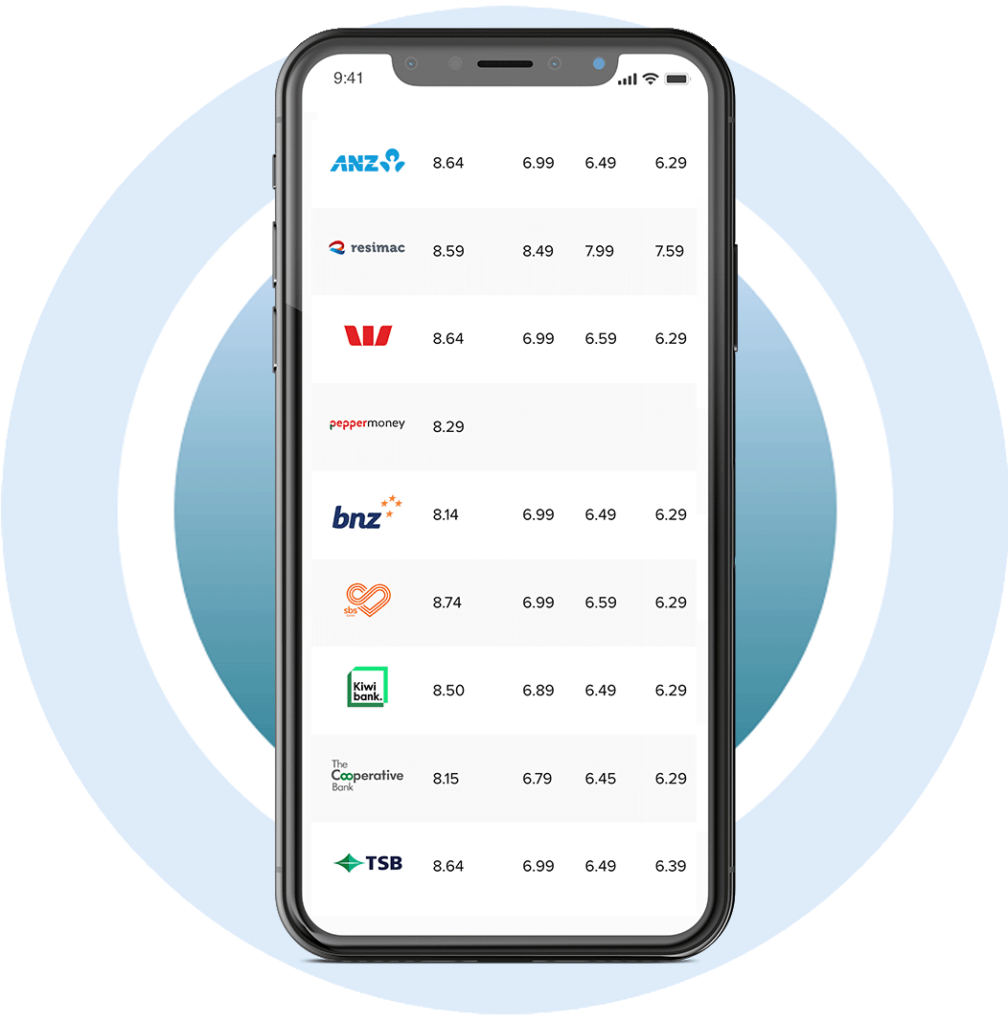
How you structure your home loan is often determined by interest rate trends. With our rates page, you can keep a sharp eye on current offers and compare lenders. The rates have been grouped into different lender types. You can also sort the entire list of options by rate.

Mortgage rates comparison table

Calculators to get you there.


Use our calculators to develop your home loan strategy for securing your next property. You can work out how much you could borrow and what your repayments might be. We also have a budget planner calculator, so you can fine tune your spending to ensure a happy balance between loan commitments and lifestyle needs.

Budget Planner

Budget Planner

Budgeting is the best way to steer your finances, stay in control and prepare for managing your mortgage.

Calculate »

Visit the Learning Centre.

Before you start talking to lenders or your mortgage adviser, brush up your knowledge about everything to do with home loans. Our Learning Centre has informative articles and guides relevant to every stage of the property buying cycle. They’re all written by expert authors, including independent economist Tony Alexander.

learning centre

Today’s Best Rates…

TermRateLender
Floating4.59Indi
6 Months4.75Westpac
Kiwibank
1 Year4.94Co-operative Bank
2 Years5.39Kiwibank
3 Years5.39Westpac
4 Years5.39Westpac
5 Years5.49SBS Bank
Westpac
BNZ
View all rates