Buying an investment property


Supporting your ambitions to grow wealth.

Making it real

Investing in a rental property or two, or even more, is a Kiwi tradition. If you’re keen to get started with an investment property portfolio, here’s our six-step 101 course for buying your first renter.

Deposit strategy

As with any property purchase that’s going to require a loan, you’ll need a deposit. For an investment property the deposit requirement is significantly higher than a home you plan to live in. Generally, you have to find a 40% deposit. This rule also applies to rent-vestors – first time buyers who plan to rent out the property rather than live in it. Here are three approaches to assembling your deposit:

1. Leverage existing property

If you own your home you may be able to use some of your equity in the property as a deposit on a rental property. Equity is the difference between the market value of your home and the amount owing on it. For example, if you own a house that’s worth around $900,000 and you have a $500,000 loan, you have $400,000 equity. You can’t use all of that equity as a deposit on a renter, because you’ll need to retain about 20% equity ($180,000) in your home.

2. Savings

If you don’t own a home, you’re a ‘rent-vestor’ – your first property is a renter, rather than a place to live in. In this situation you can’t draw on your KiwiSaver or Kainga Ora’s First Home Grant to help fund the deposit, so your 40% deposit will have to be from another source, like savings or gifted money.

3. Partnering with a friend or family member

If getting a 40% deposit together is too hard by yourself, you could consider buying your first rental property in partnership with another person. Then you’ll only have to find 20% each. Just ensure your partner shares your objectives, because your friendship could suffer if one of you wants to exit the investment before the other is ready.

Make a plan

To give your property investment the best chance of success, it helps to do your homework and make a plan. You’ll need to think about the type of property to buy, how the numbers are likely to stack up, who’s going to manage the property and when you might sell up.

Property type

Your property investment will be a residential home, a holiday home or a commercial property. Each has merits:

  • Residential properties can deliver steady income, if you can keep the property tenanted.

  • Holiday homes often experience seasonal demand, so you might get lots of lets in the warmer months and fewer in winter.

  • Commercial property is usually leased out and can provide steady income if you choose the location and property type wisely. Read more about investing in commercial property.

Calculating yield

Yield refers to how much profit an investment makes each year. It allows you to understand how much cash your rental property might provide for loan repayments. Yield is usually expressed as a percentage of the investment value. For example, a property worth $700,000 that brings in $500 rent a week will have a rental yield of 3.71%. This is ‘gross yield’ because it doesn’t consider annual expenses. ‘Net yield’ is the number you get when annual expenses are subtracted from the annual rental income. Expenses are things like rates and maintenance costs, but not mortgage interest. Read more about rental yield.

Strategy

Strategy is tied to why you’re getting into property investment in the first place. The most popular strategies are:

  • Buy and hold. This refers to long-term investment property ownership, so that you get capital gain (increase in property value) over time.

  • Buy and sell when your target is achieved. This strategy is about holding onto the property for long enough to achieve another aim, like getting enough capital gain to pay off the mortgage on the home you live in.

  • Optimum yield. If you plan to create an income stream for retirement, you’ll want to get maximum rent for minimum investment. More about building a property portfolio for retirement.

  • Buy and flip. This means you’ll improve the property up to add value, then sell it for a profit. This strategy is less likely to be successful, now that capital gains tax applies if you sell within 10 years.

Team up with a mortgage adviser

While you can work directly with a home loan provider, enlisting the help of an expert home loan adviser can save you a lot of time and frustration. Mortgage brokers/advisers work with both first-time and long-time property investors, helping them to choose a lender, decide loan structure, get loan pre-approval and organise finance in time for settlement day. More about what a mortgage adviser can do for you.

Get ready for your first meeting

The relationship with your adviser will get off to a great start if you arrive prepared with things like photo ID, proof of income, a list of debts and expenses, relevant bank statements and evidence of deposit. Read our article about preparing for a meeting with your mortgage adviser.

Think about loan structure

The task of structuring your borrowing for an investment property presents you with many options – a standard table loan, revolving credit loan, interest-only loan or even an offset loan. You also have to make decisions about floating or fixed interest rates, loan term and payment frequency. Unless you’ve been studying loan structuring for rental properties, you’ll probably need help from a mortgage adviser or accountant to choose the optimum structure.

Apply for pre-approval

Loan pre-approval is written acknowledgement that you can borrow an agreed amount, provided you meet certain conditions. Getting pre-approval can take anything from a couple of days to a week or more, so get onto it as soon as you can.

Information required for pre-approval:

  • proof of income (payslips or bank statements)

  • a budget of monthly income and expenses (use our Budget Planner)

  • a list of debts (personal loans, credit cards, overdrafts)

  • evidence of your deposit

  • two forms of identification (passport, driver license)

  • proof of address (i.e. recent power bill)

  • information about the type of investment property you want to buy

The property hunt

Hunting for an investment property is different to finding a house you want to live in. You need to buy with your head, not your heart. Here are some things to think about:

Demand

The property should be in a location (city, town or rural area) where there is strong demand for rental properties. Demand is driven by proximity to jobs, schools, shops, public transport and general desirability. Online research, talking to property managers and checking rental listings on TradeMe can help you to identify potential locations. If you choose a city or town, you need to select target suburbs.

Capital gain

Looking at figures for capital gain over time on sites like homes.co.nz will help you to check that your target location offers potential for strong capital gain.

Price

Of the properties you can afford in your preferred location, are there some that are suitable to become renters? If you can only afford a one-bedroom unit, you might need to rethink your location.

Yield

Crunch the yield numbers (explained above) to see if you can cover your costs. While some investors are happy to support negatively-geared investors, most prefer a positive gearing.

Condition

Rental properties have to meet Healthy Homes Standards before they can be let. There might be work involved to get insulation, ventilation and heating up to scratch.

Be prepared to wait for the right property to come along. Successful property investors only buy a property that meets their criteria. For further insight, read our first-timer’s guide to investing in property.


Making an offer and settling

When you find a property that ticks all the boxes, hold fire until you’re sure about these things:

  • Is the property within your loan pre-approval limits? If you need a bit of leeway, talk to your mortgage adviser.

  • Can you get landlord insurance for the property? Talk to an insurance broker for advice about rental property insurance. Some properties are riskier than others, due to their location, age or condition.

  • Has your lawyer run the usual checks on the property? Don’t skip due diligence in the rush to secure a property.

  • Is there a body corporate involved? While this isn’t a deal breaker, you need to find out what obligations and limitations come with the body corporate rules.

Buying at an auction

You can bid confidently at auction if you’ve done all the checks – title, LIM, council file, building inspection and insurability. Stick to your limit, because getting carried away on the day will mess with your carefully thought-out plan. Remember that sales under the hammer are unconditional.

Buying a property by negotiation

If the property has an asking price, you can make an offer that’s conditional or unconditional. A conditional offer lets you name conditions that must be met for the sale to go through. Conditions can include things like a satisfactory title check, LIM report, council file check and finance approval. An unconditional offer means you are obliged to buy the property if the vendor signs the sale and purchase agreement.

Final steps

There are number of tasks to complete before and on settlement day:

Completion tasks

  • Insurance cover. You need to get landlord insurance for your rental property. Your policy will need a start date that aligns with your settlement date.

  • Loan approval. If you have pre-approval already, the rest should be easy. Get your adviser onto the job of finalising your home loan.

  • Property payment. Your lawyer needs to check that financial arrangements are sorted for settlement day, including draw down of your loan and payment to the vendor.

  • Ownership transfer. Your lawyer also needs to transfer ownership of the property from the vendor to you.

Before the property can be rented, you need to think about

  • Healthy Homes Standards. Rental properties must comply with the new standards that became law in 2019. These relate to insulation, ventilation, home heating and moisture levels. All tenancy agreements must include a compliance statement.

  • Improvements that could secure higher rent and increase equity. If you’re buying a do-up make plans to get the work completed as quickly as possible, so that you can start earning rent.

  • Ongoing property management. Are you going to find tenants and manage the property yourself or do you want a property manager?

Property investment FAQs


Getting into investment property is exciting, but it can also raise a bunch of questions that demand accurate answers. This is not really the time to pick the brains of your friends and family! Based on our experience, here are some concerns that are directly related to buying an investment property. All answers have been approved by expert mortgage advisers.

What’s more important, rental yield or equity gain?

Higher rent in the short term or more equity in the long term? It’s a question every property investor has to consider. If you want to build wealth, experts generally agree that it’s better to invest in a property that has more potential for capital gain, rather than focus on high rental yield. If you want to generate income for retirement, finding cheaper properties that offer higher rental yield is a common strategy.

Should I buy a do-up as a rental property?

Improving a property after you’ve bought it will add additional rental income and extra equity to your investment equation. This is especially true if you can do some of the work yourself. So consider ugly ducklings when you’re hunting for the right property, because targeted renovations can really pay off. However, it’s wise to consult a builder to determine the cost of improvements before you decide to buy.

Do I need an accountant for my rental property?

Even if you’re handy with Xero, it’s likely you’ll need an accountant to prepare financial statements and income tax returns each year. Ask around for recommendations, check out likely candidates online and always enquire about fees, because you shouldn’t have to pay top dollar for straightforward re

Is capital gain on a rental property taxable?

Capital gain on a rental property is only taxable if you sell the property within 10 years of buying it. This 10-year period is known as the ‘bright line test’. Your accountant will know all about it.

For a city renter, is it better to buy an apartment or a house?

Apartments can be appealing, because they’re cheaper to buy and can command significant rental yield. However, the capital value of apartments tends to grow at a slower rate because they have a much lower proportion of associated land. Houses with land are usually a better proposition if your primary goal is long-term capital gain. If you want to build an income stream, an apartment with high rental yield could fit your plans nicely.

I’m a Kiwi living overseas. Can I buy a rental property in New Zealand?

New Zealand citizens living overseas can buy commercial and residential property in New Zealand. Because you’re living in another country, the property will automatically be classed as an investment.

Essential reading for property investors.

Buying an investment property is easier and less stressful when you do your homework before you hit the market. We’ve covered the basics here, to give you a good understanding of the way forward.

Learning Centre
A first-timer’s guide to investing in property

A first-timer’s guide to investing in property

Property investment has been big news over recent years. Low interest rates and soaring demand for property increased FOMO to record levels, so properties suitable for investment were being snapped up as quickly as they appeared. In response, the government moved the bright line for capital gains tax and is gradually phasing out property investors’

Read More »
How do I calculate yield on a property investment?

How do I calculate yield on a property investment?

The yield on any investment usually refers to how much money it makes each year as a percentage of the amount invested. This percentage sometimes includes any increase in value, as well as the interest or other income generated by the investment. But when it comes to a property investment, yield usually considers the rental

Read More »
Planning a property portfolio for retirement income

Planning a property portfolio for retirement income

Creating future retirement income by buying investment properties is a time-honoured way to build your wealth, so you can achieve freedom from work. And we’re not just talking about retirement in your mid-60s. There’s a global movement called FIRE (financial independence, retire early) that attracts younger followers. So whether you’re an empty-nester looking forward to

Read More »

Check out the latest mortgage rates.

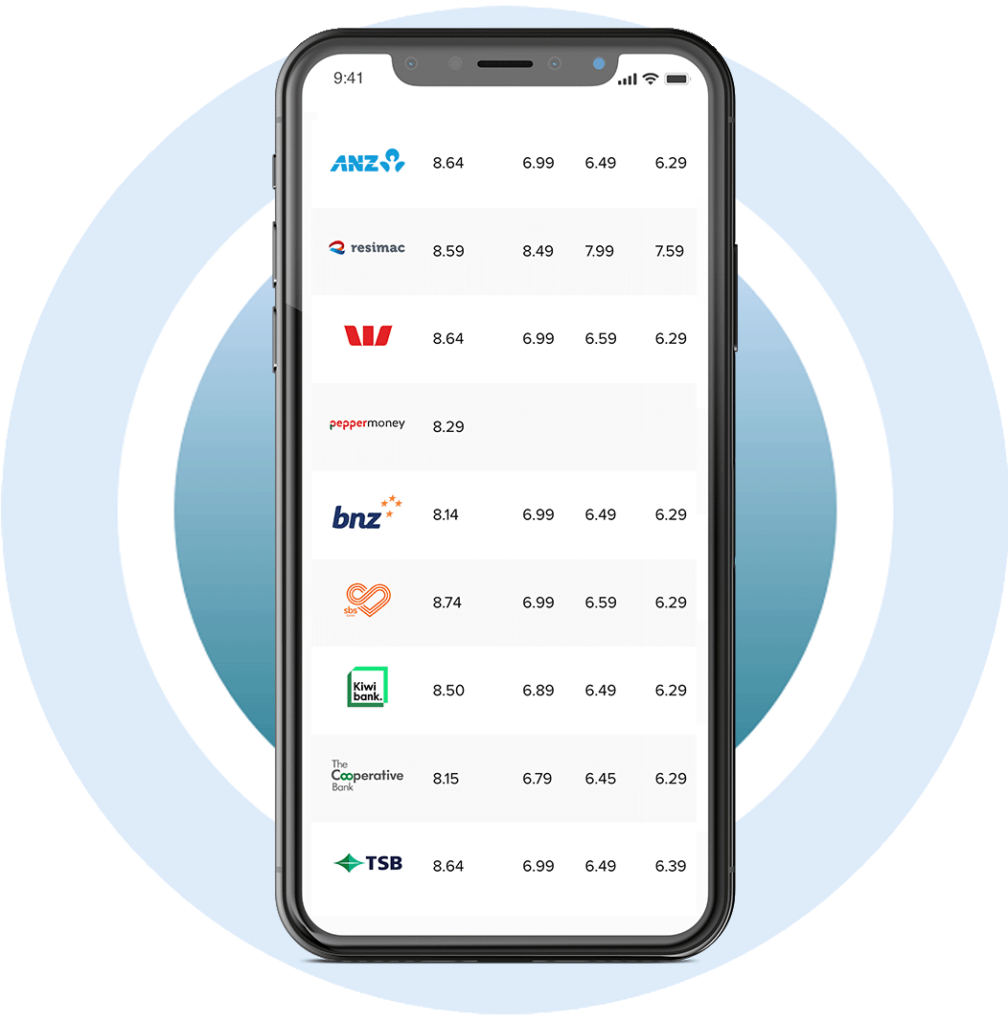
Keeping an eye on interest rates helps you to recognise a good deal. It’s all part of the due diligence that turns you into a successful property investor. The rates have been grouped into different lender types. You can also sort the entire list of options by rate.

Mortgage rates comparison table

Calculators to get you there.


Use our calculators to develop a finance strategy for securing an investment property. You can estimate how much you could borrow and what your repayments might be. We also have a budget planner calculator that can be used to work out probable annual costs for your investment property – things like rates, maintenance and insurance.

Budget Planner

Budget Planner

Budgeting is the best way to steer your finances, stay in control and prepare for managing your mortgage.

Calculate »

Visit the Learning Centre.

Before you start talking to lenders or your mortgage adviser, brush up your knowledge about finding and financing an investment property. Our Learning Centre has informative articles and guides that can help you to make good decisions. They’re all written by expert authors and checked by our panel of mortgage advisers.

learning centre

Today’s Best Rates…

TermRateLender
Floating4.59Indi
6 Months4.75Westpac
Kiwibank
1 Year4.94Co-operative Bank
2 Years5.39Kiwibank
3 Years5.39Westpac
4 Years5.39Westpac
5 Years5.49SBS Bank
Westpac
BNZ
View all rates