mortgages.co.nz & Tony Alexander Mortgage Advisers Survey – July 2022
Conditions still tough
Each month we invite mortgage advisers around the country to give insights into developments in the residential real estate market from their unique perspective. Our latest survey, undertaken last week, attracted 68 responses.
The main themes to come through from the statistical and anecdotal responses include these.
We passed the peak credit crunch period early this year but as yet availability of finance cannot be considered generous.
Investors continue to be largely absent as buyers, but the stepping back of first home buyers could be near an end – depending on their ability to get finance.
More or fewer first home buyers looking for mortgage advice
A net 7% of our responding mortgage advisers have reported seeing fewer first home buyers coming forward for financing advice. This is better than the net 12% of June and the best (least bad) result since October last year.
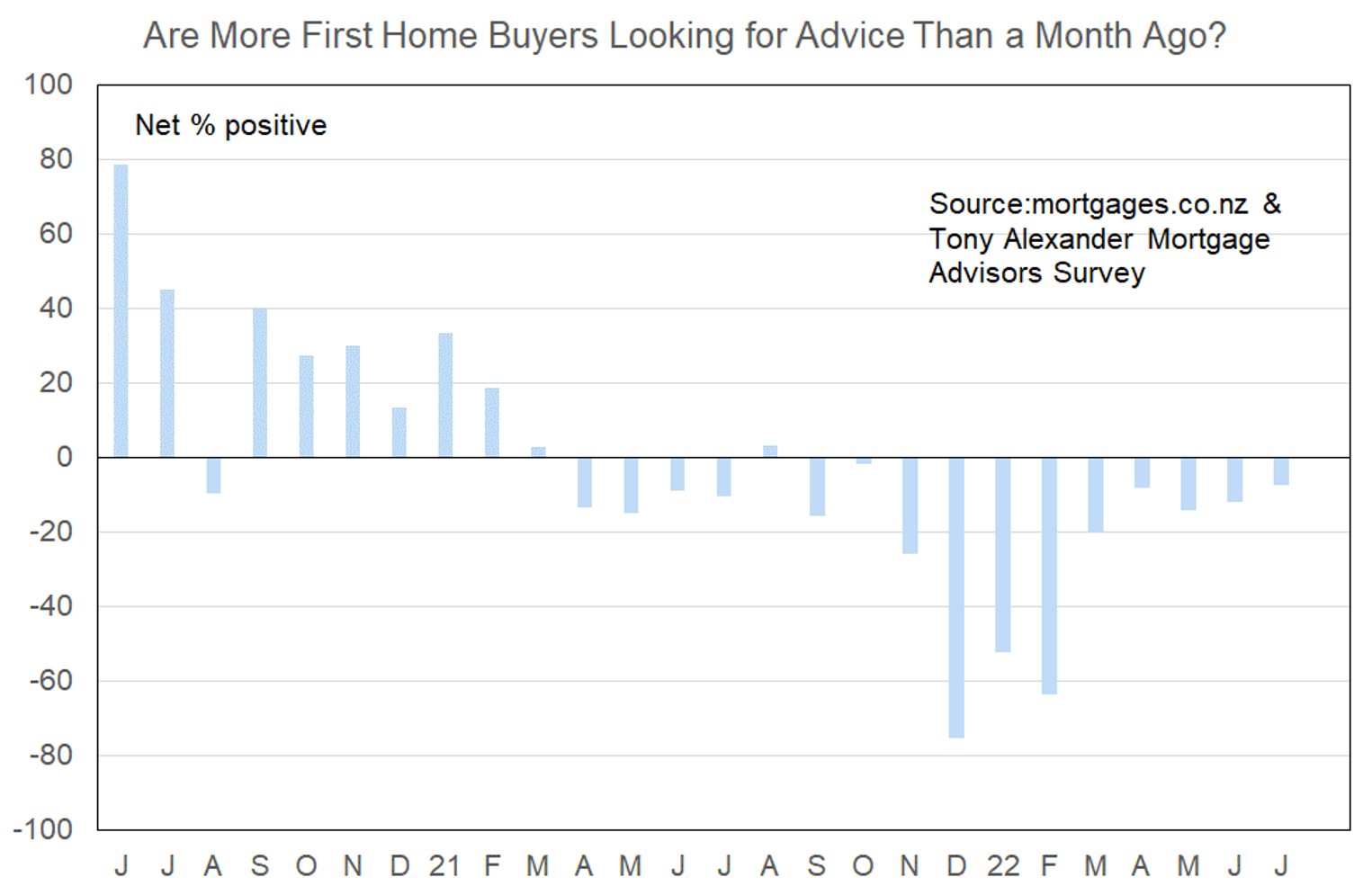
In November 2021 first home buyers were hit badly by the tightening of LVR rules, and then hit again from December when the CCCFA changes came into effect. The result was a net 75% of mortgage advisers in December reporting fewer first home buyers looking for assistance.
In that regard the latest result of -7% means we are well past the worst of the credit crunch. However, as yet there are few solid signs that first home buyers are stepping forward in greater numbers.
Comments on lending to first home buyers submitted by advisers include the following.
There are limited low deposit options outside new builds and Kainga Ora. High test interest rates are reducing the amount FHB’s can borrow.
The majority of first home buyers I am dealing with lately are with Kainga Ora First Home loans, due to them not having a 20% deposit.
Most lenders have backed off from low equity loans and are again prioritising existing customers over new to bank customers.
CCCFA ‘improvements’ are immaterial and make no difference.
Due to high servicing test rate, approvals are a wee bit challenge at this stage however banks are open to lend and anyone that fits is getting approved with decent cash backs.
There has been some loosing up of the detailed analysis of bank statements. Lenders are now accepting that what happened in the past is not a reflection of what spending habits will be in the future once new lending is in place. Biggest issue now is not the value of a new home, but the cost of the repayments given the rising interest rates.
Less emphasis on spending habits.
More or fewer investors looking for mortgage advice?
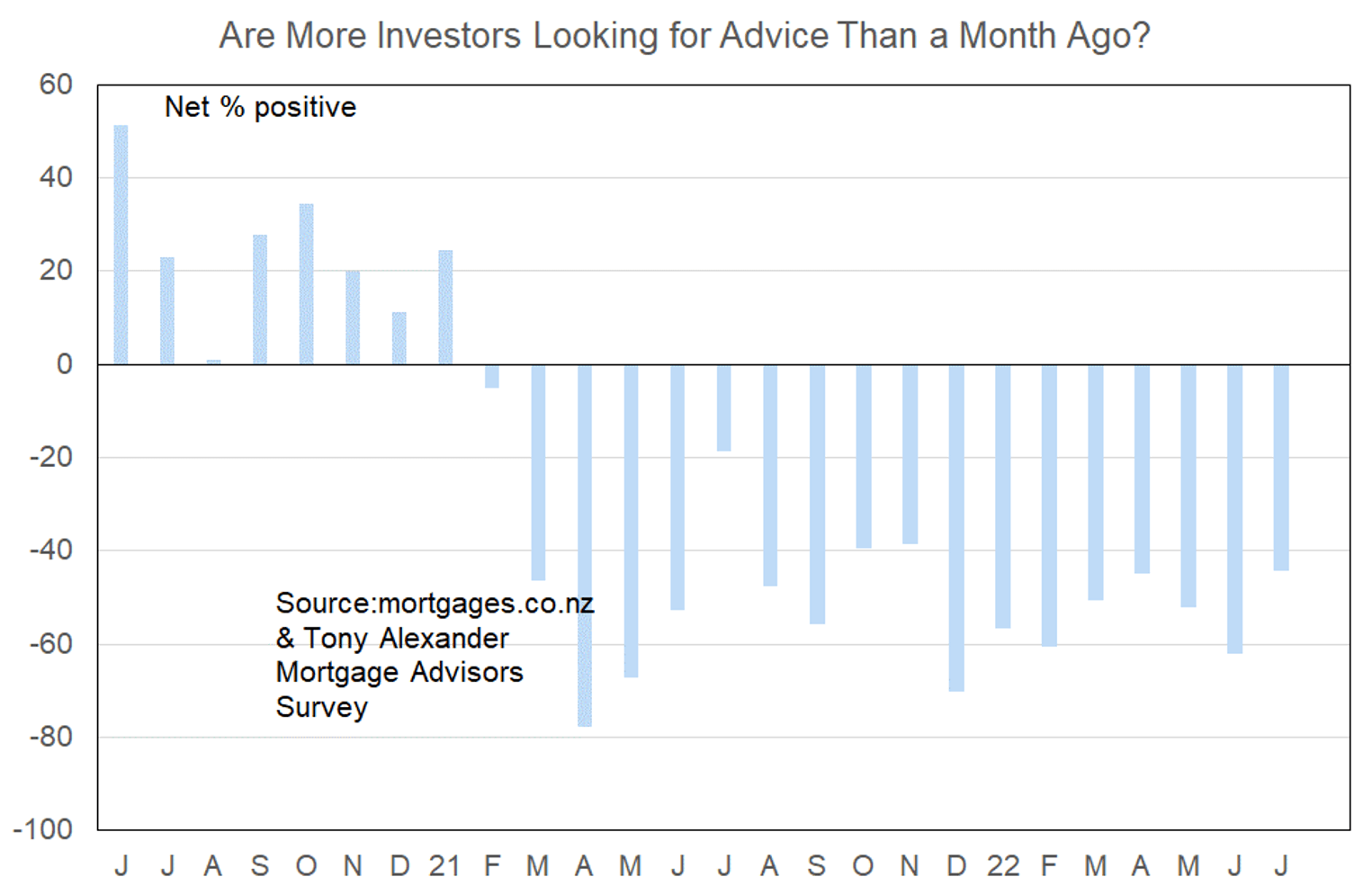
A net 44% of advisers have reported that they are seeing fewer investors coming forward for assistance with arranging finance. The graph here tells us that there is no obvious improving trend in this measure and investors by and large have stepped back from buying ever since the tax changes were announced last year.
Comments made by advisers regarding bank lending to investors include the following.
Rent being scaled heavily and accounting for rates and insurance separately. Pretty penalising for investors at the moment under regular bank criteria and difficult to find solutions.
There is still quite a difference in rental income calculations between different banks
Interest Only is becoming harder to get for more than 2 years. Could previously get up to 5 years with no issue. Conversations are now around when they plan to re-enter the market so they can time the run for the 2024 Tax Year (assuming National wins next Sept) so they can have the interest deductibility back.
Difficult for investors. Not a lot of activity, however, investors starting to enquire again.
Investors have fallen off a cliff. I’ve not done an investment loan since May.
More or less lenders willing to advance funds?
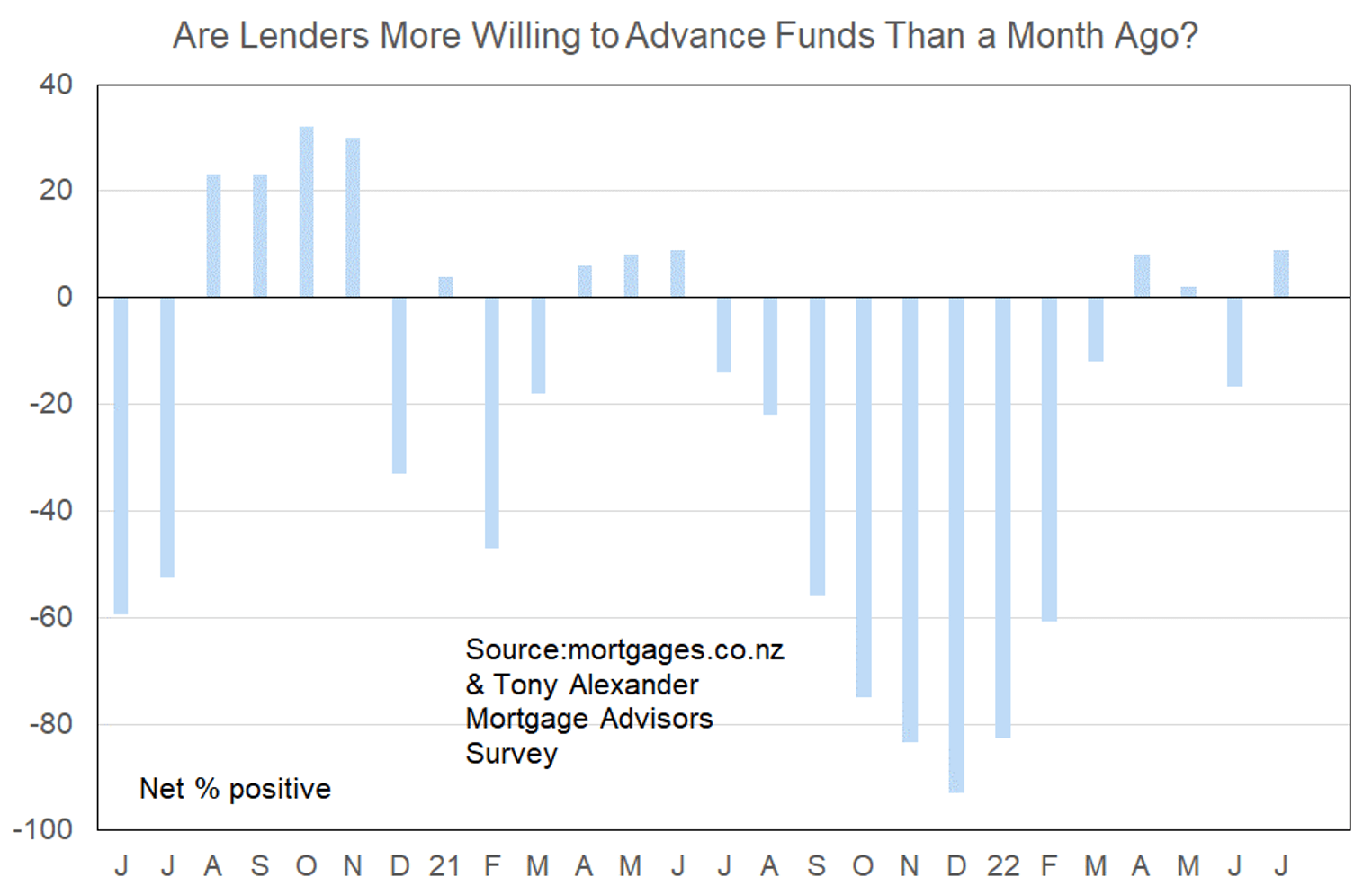
This month’s survey has revealed a slight improvement in the net proportion of advisers saying banks are more willing to lend funds to +9% from -17% in June. This is the firmest result since June last year but not yet strong enough to allow us to say that bank willingness to lend has decidedly turned for the better. It is more that the period of their high unwillingness to lend has passed.
What time period are most people looking at fixing their interest rate?
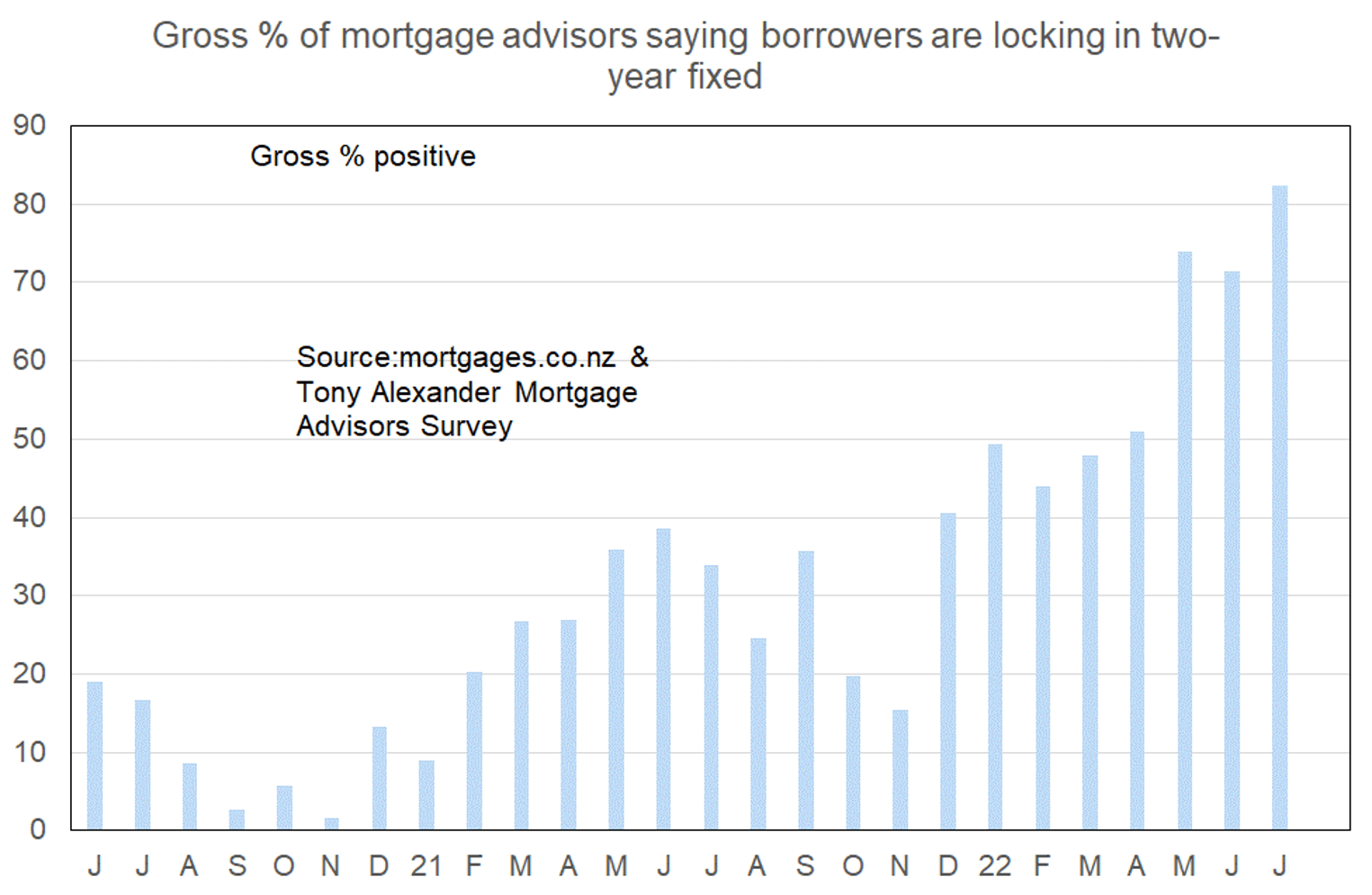
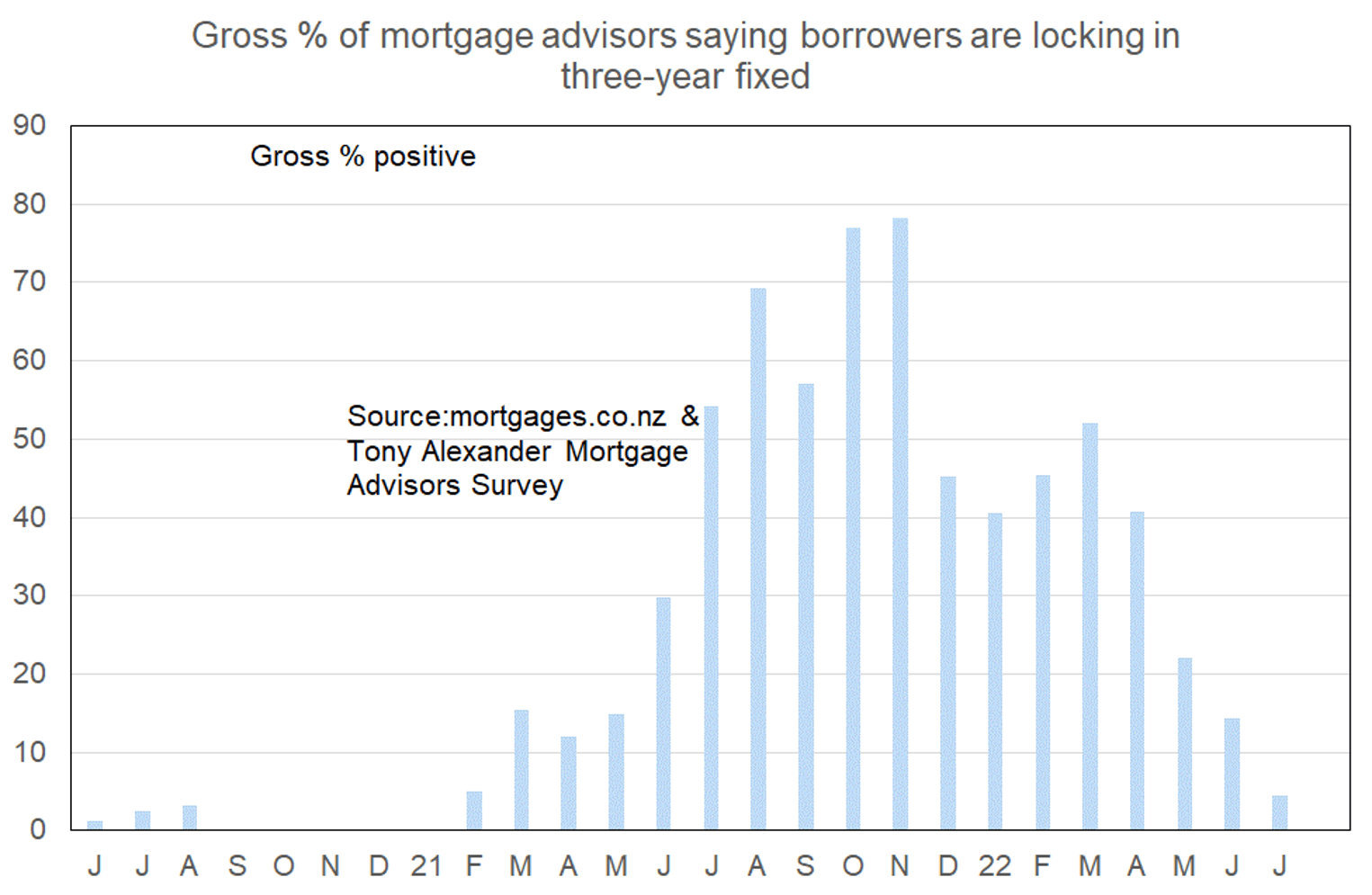
82% of our responding mortgage advisers have noted that the fixed mortgage rate term most favoured by borrowers is two years. This is higher than the 71% who said last month that this is the preferred fixing period with the change accounted for by a drop in those preferring fixing three years from 14% to 4%.
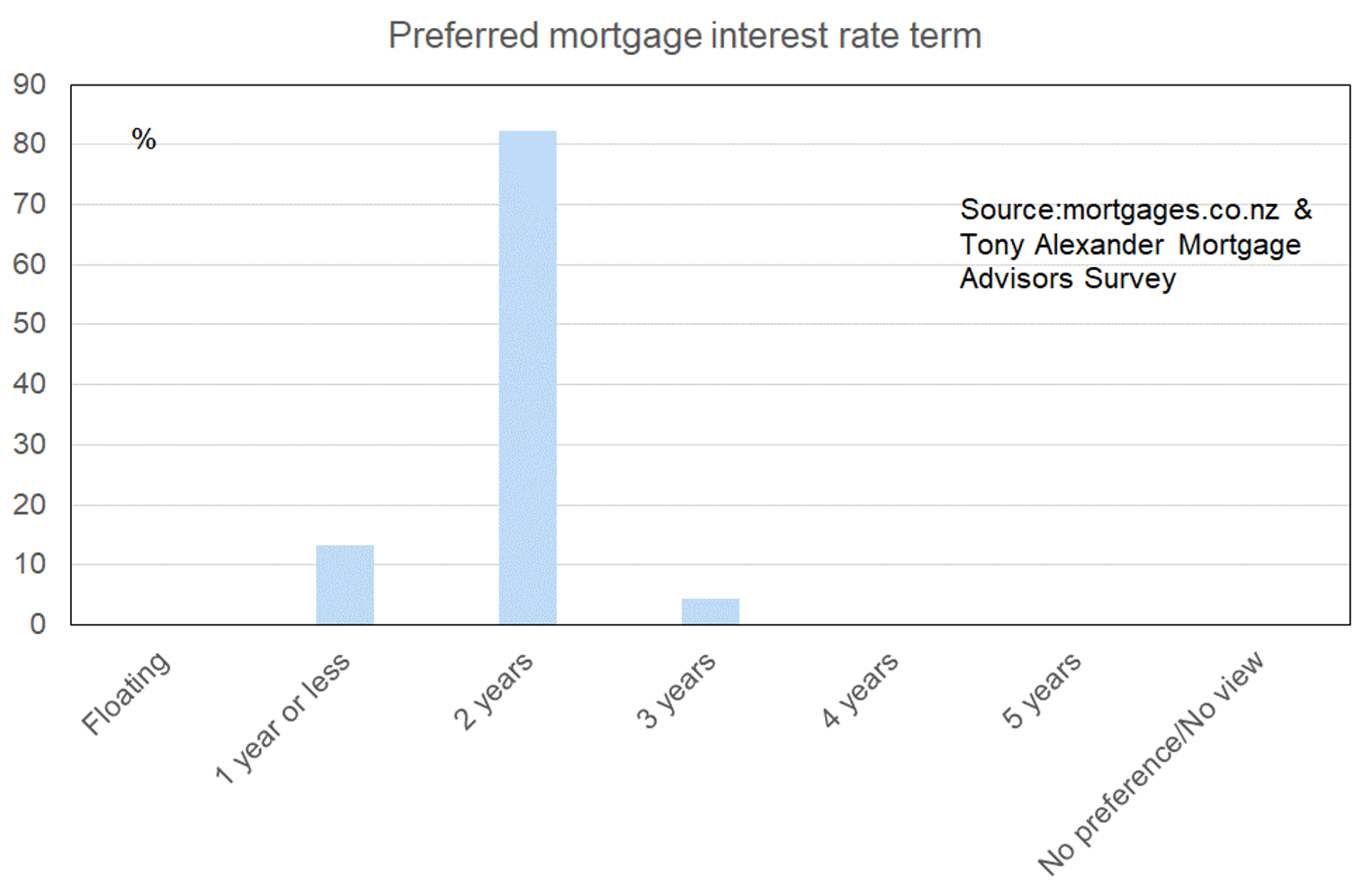
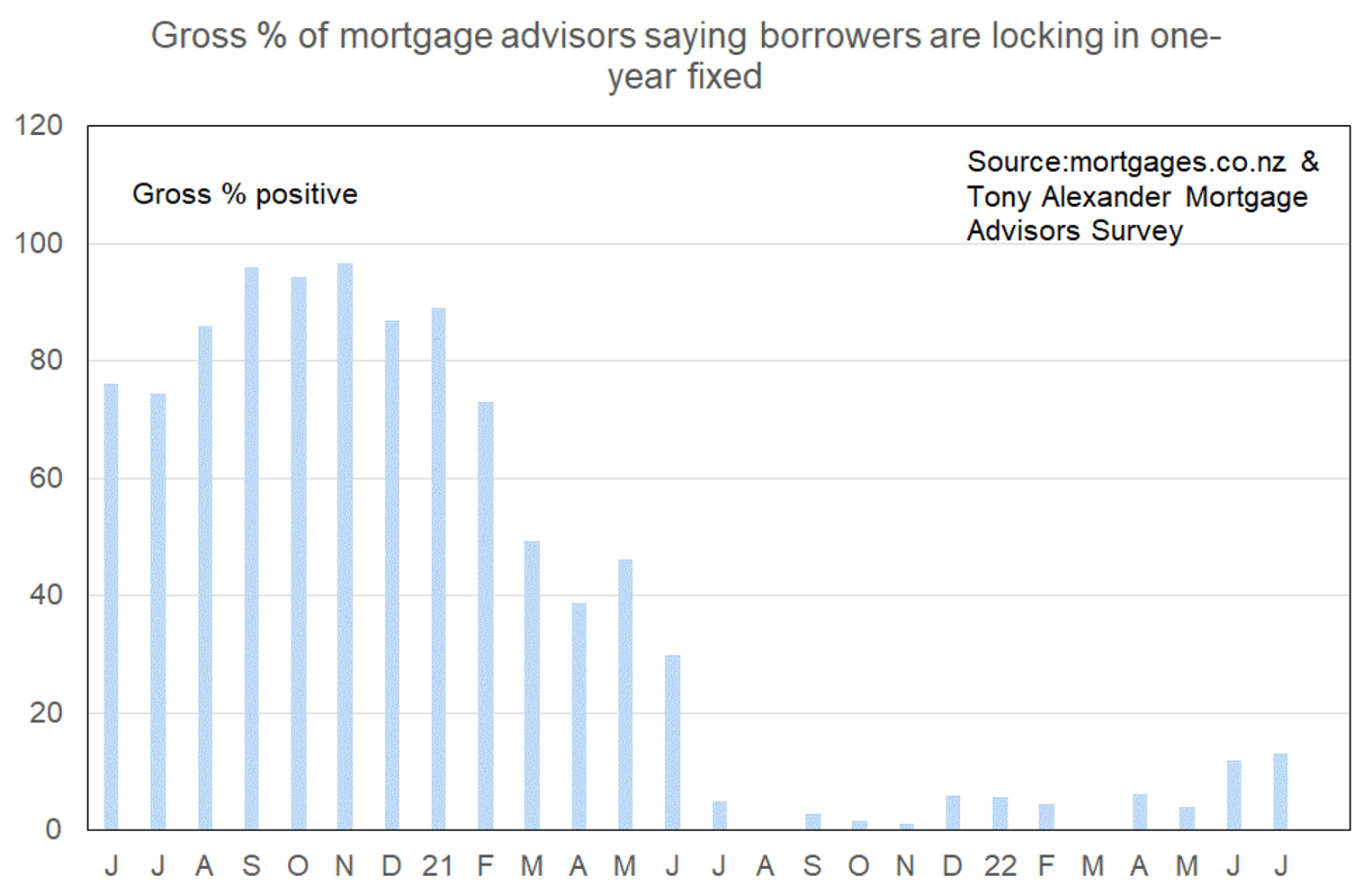
The proportion saying one year fixing is most preferred is virtually unchanged from the 12% of last month.
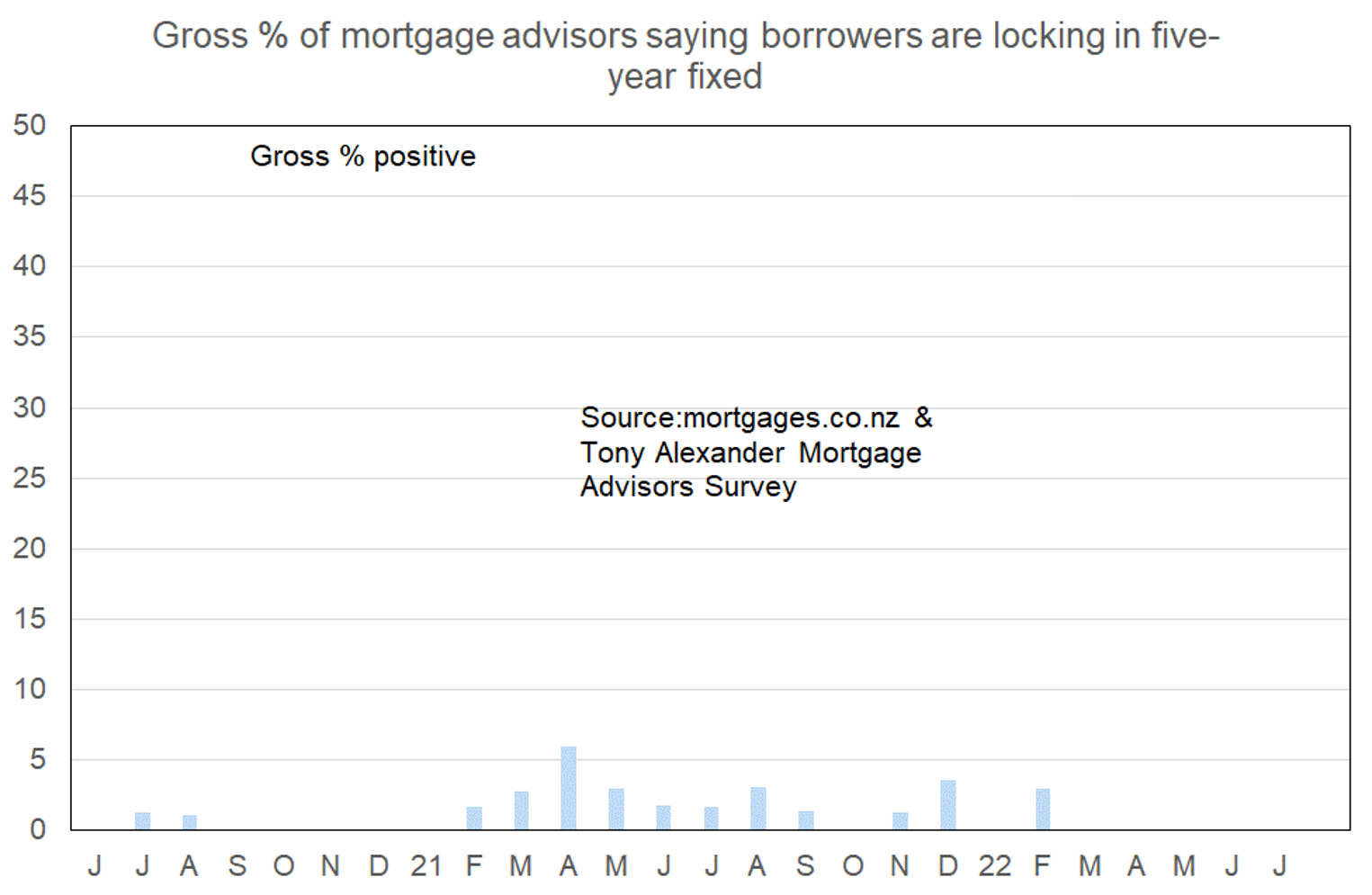
As ever, hardly anyone wants to fix their interest rate for five years. That makes sense at this point in the interest rates cycle but would have by far been the wisest thing to do for most borrowers over a year ago when the rate was commonly at 2.99%. It is currently above 6%.